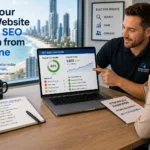

Google Ads can put your business in front of people who are already searching for your services. But paying for the click is only the first step.
The landing page, offer and tracking determine whether that click becomes a useful enquiry.
A campaign may have relevant keywords, clear adverts and a sensible budget, yet still produce weak results. In many cases, the problem is not limited to the Google Ads account. The page may not match the searcher’s intent, the offer may be unclear or important conversions may not be tracked properly.
That is why we use a page first approach. Before recommending more spend, we check whether the page, offer and tracking are ready to turn relevant traffic into genuine enquiries.
Why Google Ads clicks do not always become qualified leads
Paid search attracts people who are actively looking for a solution. That makes high intent clicks valuable, but also costly to waste.
When someone clicks an advert, the next page should immediately confirm:
- What service is available
- Whether it is available in their location
- Why the business is worth considering
- What they need to do next
If visitors have to search for those answers, their initial buying intent can quickly fade.
Generic homepages often dilute the message
Many businesses send every paid search visitor to the homepage. This is convenient, but it is not always the strongest destination.
A homepage usually serves several audiences. It may introduce the business, list multiple services, show recent work and direct visitors to different areas of the website.
That breadth may suit general visitors. It is less effective for someone who clicked an advert about one specific service.
A person searching for Google Ads management on the Gold Coast should not have to work out whether the business offers that service, where it operates or how to request help. The page should answer those questions immediately.
Weak offers attract weaker responses
The landing page also needs a clear offer.
A broad promise such as “grow your business online” does not explain what the visitor will receive. A stronger offer identifies the service, the intended outcome and the next step.
For example:
Get a review of your landing page, conversion tracking and Google Ads setup before increasing your campaign budget.
The offer does not need to be aggressive. It needs to be specific enough for the visitor to decide whether it matches their needs.
A clearer offer also improves campaign targeting. It becomes easier to choose relevant search terms, write accurate adverts and direct visitors towards the right action.
What a high converting Google Ads landing page should include
A paid search landing page does not need to explain everything about the business. It needs to present the most important information in the right order.
A headline that matches the search
The headline should confirm that the visitor has reached a relevant page.
If the advert promotes a particular service in a particular location, the page should reflect that context naturally. A broad headline may create uncertainty, even when the business offers exactly what the visitor needs.
For local campaigns, the heading may include the Gold Coast or the specific service areas being targeted.
A clear service promise
Visitors should understand the offer without reading the entire page.
Explain:
- What the service includes
- Who it is suitable for
- What problem it addresses
- What happens after the enquiry
Avoid vague claims such as “tailored digital solutions” unless the page immediately explains what that means in practical terms.
Relevant proof
Claims are more persuasive when they are supported.
Useful proof may include:
- Relevant case studies
- Customer reviews
- Recognised qualifications
- Examples of previous work
- Clear service processes
- Verified performance data
- Experience in the customer’s industry
For example, saying that a campaign generated “better leads” is vague. Explaining that a revised landing page reduced irrelevant enquiries or increased qualified booking requests gives the reader something meaningful to assess.
Proof should help the visitor make a decision. It should not be added simply to fill the page.
One clear next step
The page should make the desired action obvious.
That action might be:
- Requesting a quote
- Booking a consultation
- Calling the business
- Completing an enquiry form
- Requesting an account review
The call to action should explain what the visitor is asking for. “Request a Google Ads readiness review” is more useful than “Learn more”.
A strong mobile experience
Many local searches happen on mobile devices. The page should load cleanly, remain easy to scan and make calls or enquiries simple.
The Australian Communications and Media Authority reported that 97% of Australian adults accessed the internet through a mobile phone in 2025, while 92% used mobile internet daily. This level of mobile use makes the landing-page experience a central part of campaign performance, particularly for local service searches where visitors may want to call, request a quote or submit an enquiry immediately.
Long forms, small buttons, cluttered layouts and buried contact details create unnecessary friction.
Why conversion tracking matters
Clicks show that people reached the website. They do not show whether those people became useful enquiries, booked appointments or paying customers.
Conversion tracking helps connect ad spend with meaningful actions.
Depending on the business, these actions may include:
- Phone calls
- Contact form submissions
- Quote requests
- Online bookings
- Purchases
- Qualified leads recorded after the initial enquiry
Incomplete tracking leads to poor decisions
When important actions are not recorded, the campaign may appear better or worse than it really is.
One search term may look expensive but produce the strongest enquiries. Another may generate cheap form submissions that rarely become customers. Without accurate tracking and lead quality feedback, both may appear equally valuable.
This can lead to wasted budget.
Useful search terms may be paused too early. Weak traffic may continue receiving spend. Landing page problems may remain hidden because the account reports a conversion that never became a genuine opportunity.
Tracking should therefore be part of the campaign setup, not an afterthought.
How we prepare Google Ads campaigns for Gold Coast businesses
We look beyond keywords and advert copy. Before increasing traffic, we assess the full conversion path.
We review the destination page
We check whether the page reflects the service being advertised and the intent behind the search.
This includes reviewing:
- The headline
- The service explanation
- Location relevance
- The offer
- Supporting proof
- The call to action
- Mobile usability
- The enquiry process
Sometimes an existing service page needs only a clearer headline, stronger proof or a better CTA. In other cases, a dedicated landing page may provide a more focused experience.
The goal is not to create another page unnecessarily. It is to give relevant visitors a clear route towards becoming qualified enquiries.
We separate different levels of intent
Not every search carries the same commercial value.
Some searches suggest the person is still researching. Others indicate they are comparing providers or preparing to make contact.
Separating those searches where possible helps prevent high intent traffic from being mixed with broader informational demand.
Location intent also matters for Gold Coast service businesses. A campaign targeting the entire region may behave differently from one focused on specific suburbs, travel distances or service areas.
The right structure depends on:
- Where the business operates
- How far customers are willing to travel
- Which locations generate useful enquiries
- Whether different suburbs require different offers
- Whether the business serves residents, commercial buyers or visitors
Campaign targeting should reflect how the business actually wins work, not simply how wide an area it can technically reach.
We check the conversion signals
Before relying on campaign reports, we confirm that important actions are being recorded correctly.
This may include testing:
- Contact forms
- Call tracking
- Booking events
- Thank you pages
- Purchase tracking
- Lead status updates
Where possible, we also review which enquiries become qualified opportunities.
This provides a stronger basis for optimisation than click volume or form submissions alone.
What a Google Ads agency should review beyond the ad account
Google Ads performance depends on more than keywords, bids and advert copy. A capable agency should also examine what happens before and after each click.
That includes reviewing whether:
- The campaign targets searches with genuine buying intent
- The advert accurately reflects the service
- The landing page matches the search and location
- The offer is clear enough to support a decision
- Trust signals answer the visitor’s main concerns
- Forms, calls and bookings are tracked correctly
- Recorded conversions become qualified leads
This wider review matters because an apparently efficient campaign can still produce poor commercial results. Low cost enquiries have little value if they are irrelevant, unqualified or unlikely to become customers.
Before increasing the budget, your agency should be able to explain where performance is being lost and which change is most likely to improve it.
That may involve:
- Refining the targeting
- Rewriting the advert
- Improving the landing page
- Strengthening the offer
- Correcting the tracking
- Improving lead handling
The goal is not simply to buy more traffic. It is to create a clearer path from a relevant search to a qualified enquiry.
Is your website ready for Google Ads?
Before launching or increasing a campaign, ask five questions:
- Does the landing page clearly match the service being advertised?
- Can visitors understand the offer within a few seconds?
- Is there relevant proof to support the claims?
- Is the next step clear and easy to complete?
- Can the business accurately track calls, forms and other valuable actions?
If the answer to one or more of these questions is no, it may be worth improving the page or tracking before increasing the budget.
Build a stronger foundation before spending more
Google Ads can create visibility quickly, but visibility alone does not produce a commercial return.
A successful campaign needs a clear offer, a relevant landing page and reliable conversion tracking. Without those foundations, more traffic may simply expose the same weaknesses to a larger audience.
Our Google Ads readiness review examines the full conversion path, including the landing page, offer, campaign setup and tracking. The aim is to identify where potential leads are being lost and what should be improved before more budget goes live.
Already running Google Ads or preparing to launch a campaign?
Request a Google Ads readiness review to find out whether your page, offer and tracking are ready to turn more clicks into qualified enquiries.
Frequently asked questions
Do I need a dedicated landing page for Google Ads?
Not always. An existing service page may work well if it closely matches the search, explains the offer clearly and provides a focused next step.
A dedicated landing page may be more suitable when the current page is too broad, promotes several services or contains too many distractions.
What conversions should a service business track?
Useful conversions may include phone calls, contact forms, quote requests and bookings.
Businesses should also review which enquiries become qualified leads. Treating every recorded action as equally valuable can lead to poor campaign decisions.
Can an existing Google Ads campaign be improved?
Yes, but the first step is identifying where performance is being lost.
The issue may sit in the targeting, search terms, advert, landing page, offer, tracking or lead handling process. Changes should be based on evidence rather than assumptions.
How can I tell whether my landing page is the problem?
Check whether the page matches the search, explains the service quickly, includes relevant proof and provides a clear CTA.
Conversion data, call quality, form completion rates and user behaviour can also help identify where visitors abandon the process.
How much should a Gold Coast business spend on Google Ads?
There is no suitable budget for every business.
The right amount depends on search demand, competition, click costs, location, lead value and how efficiently the campaign converts traffic into qualified enquiries.
It is usually better to confirm that the landing page and tracking are working properly before increasing spend.
Can you review the landing page as well as the Google Ads campaign?
Yes. The landing page is part of the conversion path and should be reviewed alongside the campaign.
A useful review should consider the page structure, offer, proof, mobile experience, call to action and conversion tracking rather than focusing only on the ad account.